
Week 6 – November 13, 2025

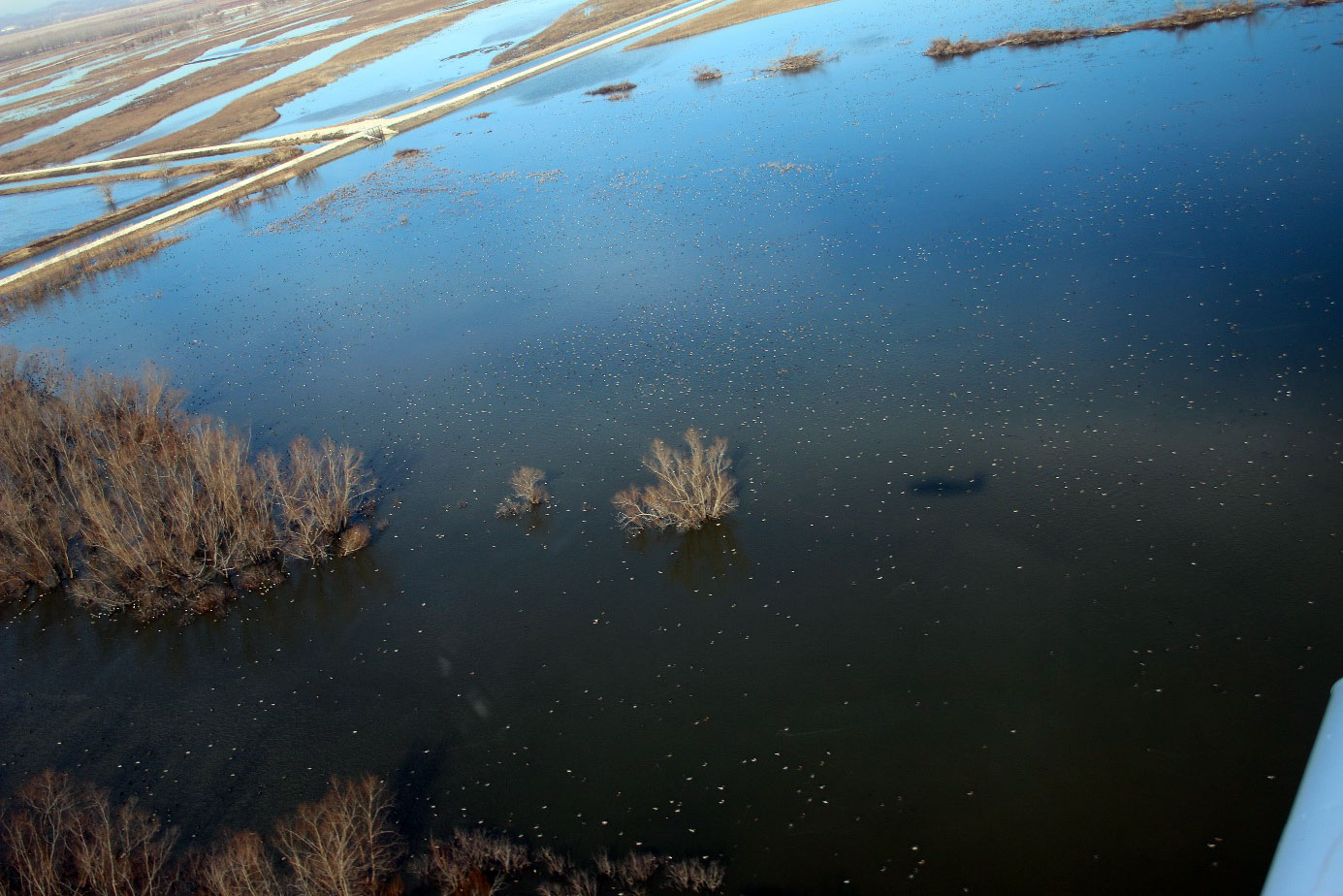
We got back in the air for the waterfowl flight on Thursday, November 13, 2025. We have had an increase in duck abundance since our last flight, especially diving ducks! Total duck abundance (384,076) was 5% greater than long-term averages in the Illinois River Valley, thanks largely to every duck not called mallard. Unfortunately, mallard abundance (101,806) was observed 26% below LTA this week on the Illinois River. Green-winged teal (26%), pintail (14%), gadwall (25%), and shoveler (17%) abundances were all greater than LTA this week. We even seemed to have picked up some divers this week, which makes sense, given the harvest reports in our local area.

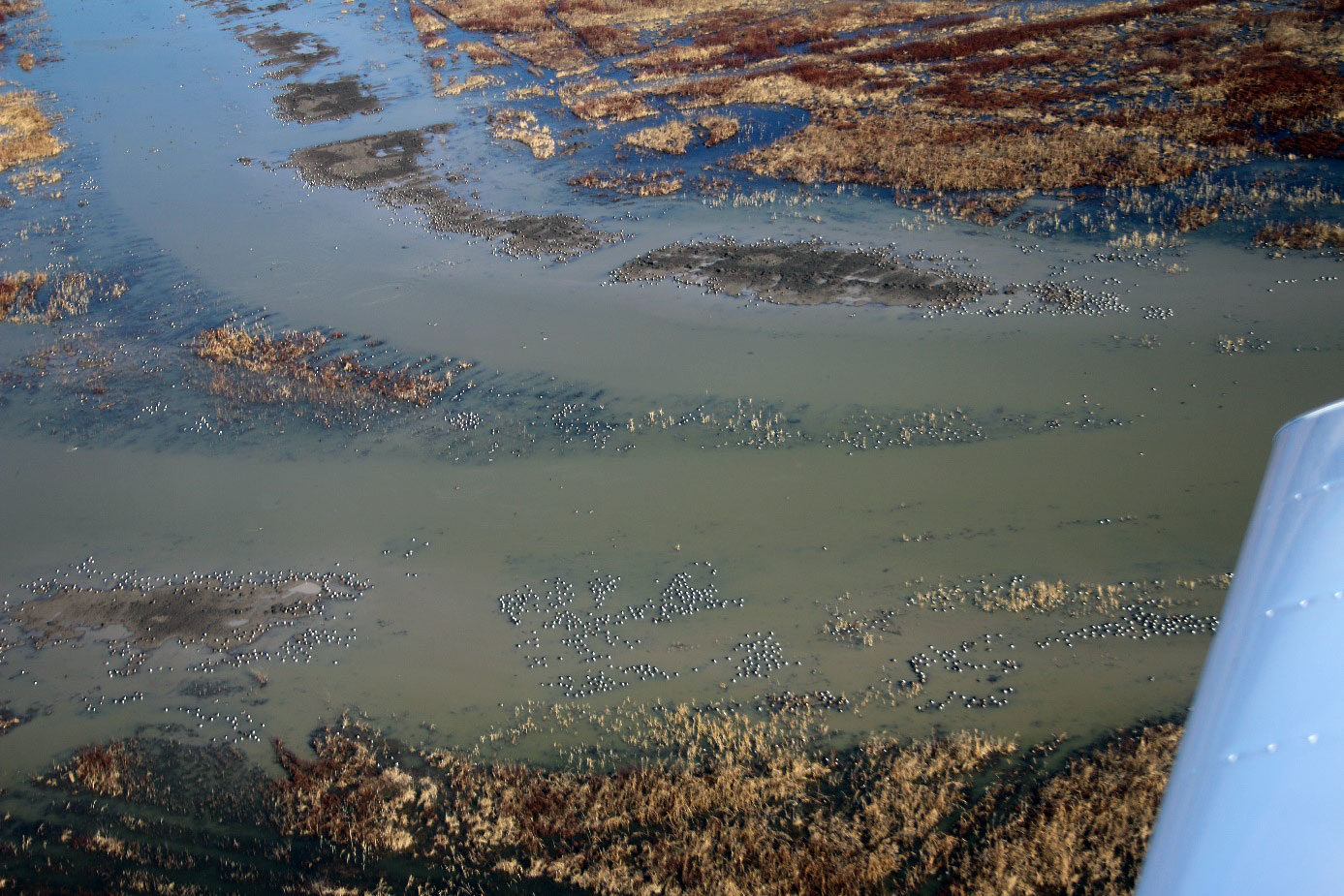
Outside of the apparent increase in divers, abundance trends along the Mississippi River were drastically different from those observed on the Illinois River this week. Mallard (-64%), pintail (-19%), and green-winged teal (-3%) abundances were all below LTAs along this river system. Other than redheads, scaup, and canvasbacks, all other species were also below LTA this week, ultimately leading to total duck abundance being 22% below LTA this week. Though the divers on pool 19 aren’t necessarily “early,” I wasn’t expecting the number we saw. The rafts took a couple of extra passes to wrap my head around.

I didn’t get to do one last year, so this is my annual tribute to our four-legged companions. Dogs play a vital role in the hunt, if you’re lucky enough to hunt over a good one. I’m thankful that I have been. In the dog community, you’ll often hear “retrievers save game.” Although I don’t need it because I’ve seen it with my own eyes, there is data to support this claim. In fact, data suggests a well-trained retriever can increase recoveries of crippled birds by as much as 40%. Aside from having a much better sense of smell than we do, they can get in and out of places we just can’t as humans. And let’s face it, it’s much more convenient to send a dog to chase a downed bird than trudge through the muck to get to it yourself.

Personally, dogs are an integral part of life. They keep me company on slow hunts, nudge my arm for a retrieve when they know I need a break from the computer, and are a part of my family. We spend a lot of time in the off-season training and, to me, there’s just nothing like watching a dog do its work. A good gundog is never late and is our extra set of eyes in the duck blind. They only want to do their job well for you and won’t rest until they do. They’re irreplaceable. Family.

Another saying in the dog community: the cost of owning a good dog is heartbreak at the end. I don’t need data to know that’s true either. Give ‘em a little extra food, scratch the scruff of their neck, and maybe pat them on the belly a time or two. We don’t deserve dogs, but I’m sure glad He gave ‘em to us.

For more information on the survey and this week’s numbers, visit Aerial Inventories.

Abandoned flight

We started the waterfowl survey on Tuesday the 8th, but the weather deteriorated quickly and we had to abandon the flight. We were successful in completing the entire flight on Thursday, December 10th. The ice we witnessed last week was all but gone, and the good news is we still have a few ducks around. We counted 241,875 ducks along the Illinois River and >60% of those birds were mallards. Likewise, we estimated 414,560 ducks along the central Mississippi River this week with about 41% of those being mallards. Surprisingly, we still have very strong numbers of northern pintail, green-winged teal, gadwall, northern shoveler, and canvasbacks around.

The bad news is we lost about half of our ducks compared to the December 2nd survey or roughly down 43% along the Illinois River and 50% along the central Mississippi River. I am sure some of the duck decline was due to birds moving back out on the landscape as the wetlands thawed and the ice diminished, but I believe some of those birds ended up in southeastern Missouri and western Tennessee. A couple of hunters have told me the ducks departed central Illinois on Saturday and Sunday evenings shortly after sunset. And I have heard from a couple of hunters that shot limits of ducks in western Tennessee over the last couple of days.

Our duck seasons are drawing to a close up here in northern and central Illinois. The north zone goes out on Tuesday, December 15th, while the central zone ends on Tuesday, December 22nd. Get out there and enjoy the remaining days of the season! Maybe the coming rain and snow on December 11-12 will bring in a few new migrants to end our seasons on a high note. Time will tell.

Be careful out there!
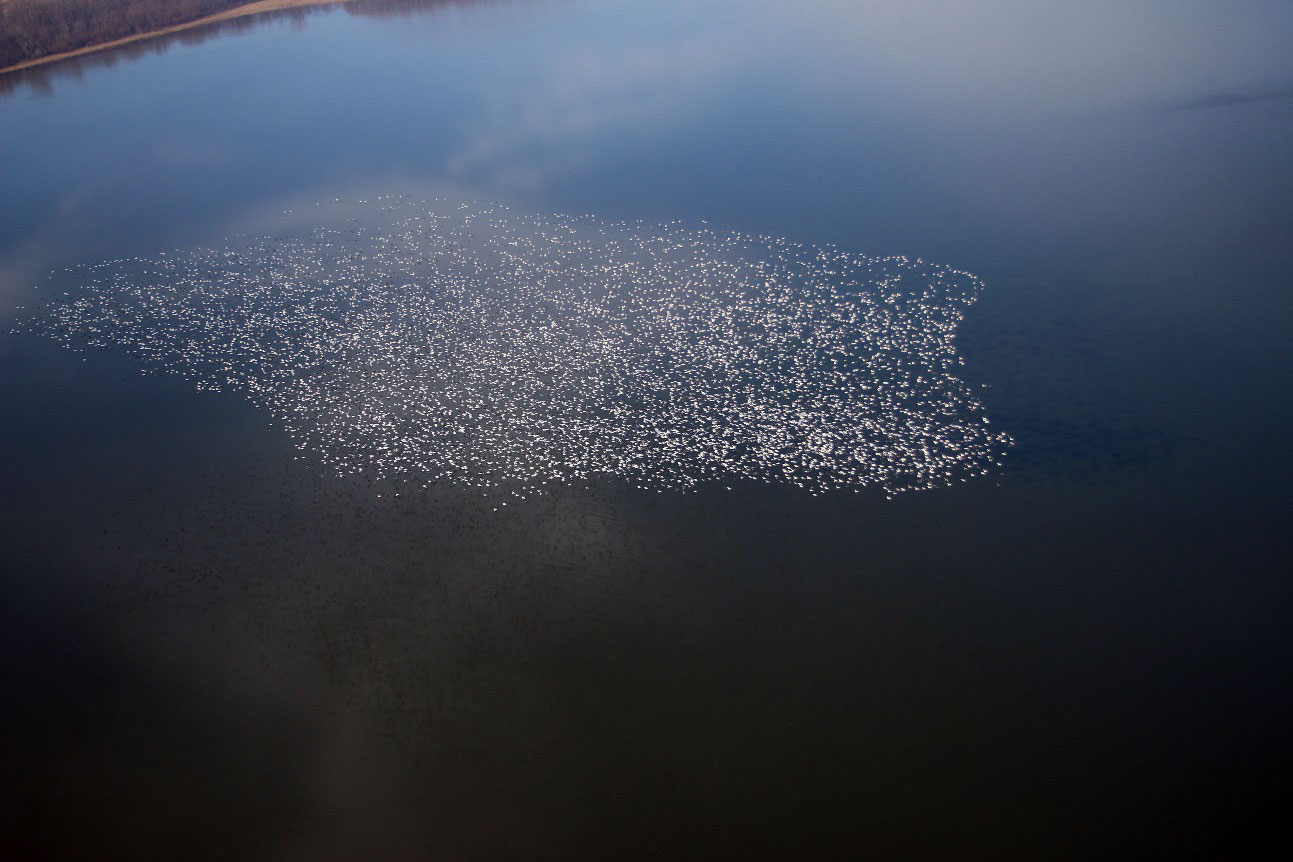
For those of you hunting snow geese and greater white-fronted geese, there are a few large concentrations around. This flock of snows was using Swan Lake at Two Rivers NWR on December 10, 2020.

I thought this photo was neat with the shadow of the airplane on the ducks at Clarence Cannon Refuge, Missouri on December 10, 2020.

Some of the remaining northern pintails basking in the sun at Clarence Cannon National Wildlife Refuge near Annada, Missouri on December 10, 2020. Note how the pintail have congregated on the shallow mudflats near the moist-soil vegetation rather than randomly spacing themselves in the water.

Illinois River Waterfowl Aerial Inventory – 12/10/2020

Central Mississippi Waterfowl Aerial Inventory – 12/10/2020

Forbes Biological Station
20003 N CR 1770E
Havana, IL 62644
217-332-DUCK (3825)
Newsletter (link opens in new window) Give
Log In