
Week 6 – November 13, 2025

We got back in the air for the waterfowl flight on Thursday, November 13, 2025. We have had an increase in duck abundance since our last flight, especially diving ducks! Total duck abundance (384,076) was 5% greater than long-term averages in the Illinois River Valley, thanks largely to every duck not called mallard. Unfortunately, mallard abundance (101,806) was observed 26% below LTA this week on the Illinois River. Green-winged teal (26%), pintail (14%), gadwall (25%), and shoveler (17%) abundances were all greater than LTA this week. We even seemed to have picked up some divers this week, which makes sense, given the harvest reports in our local area.

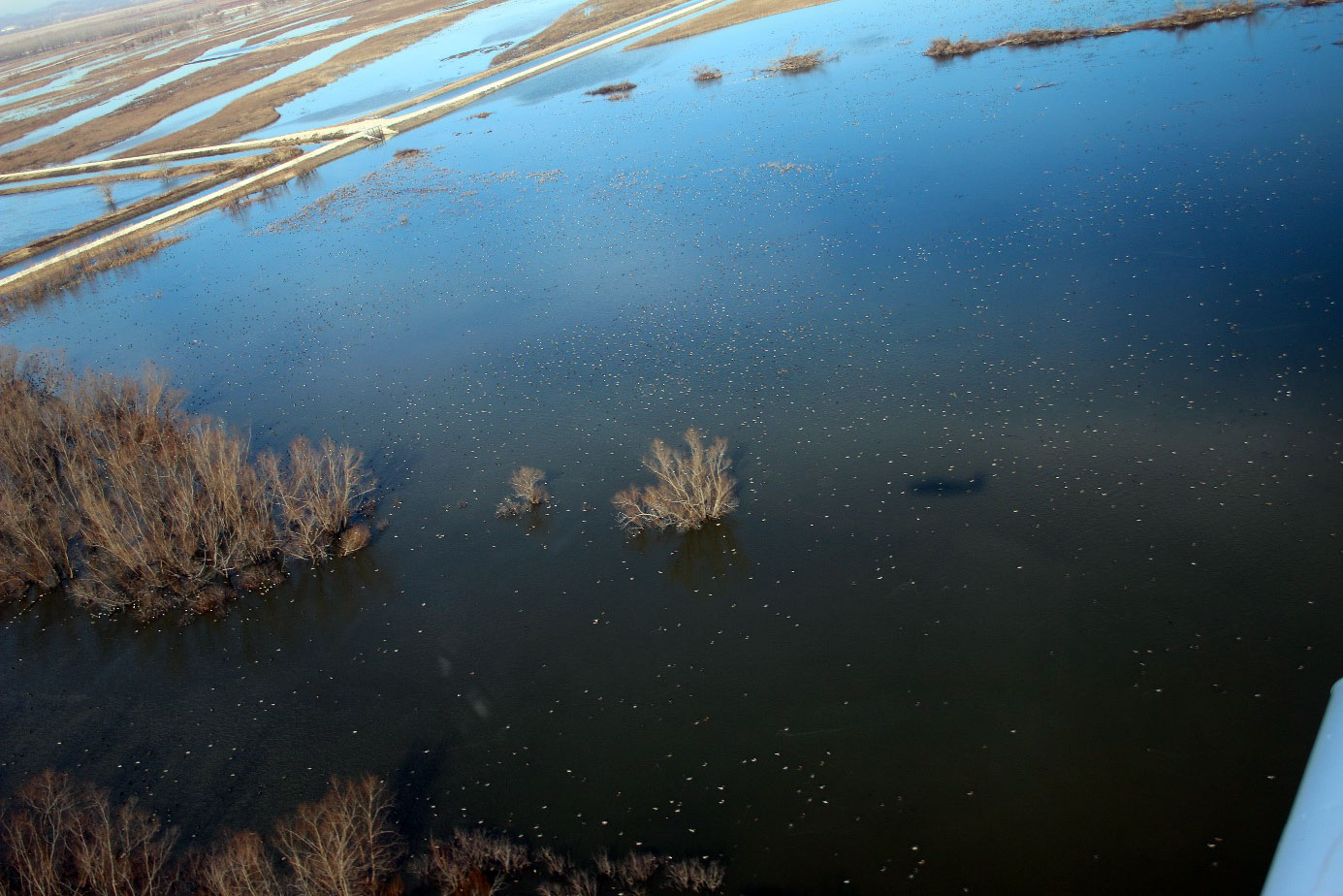
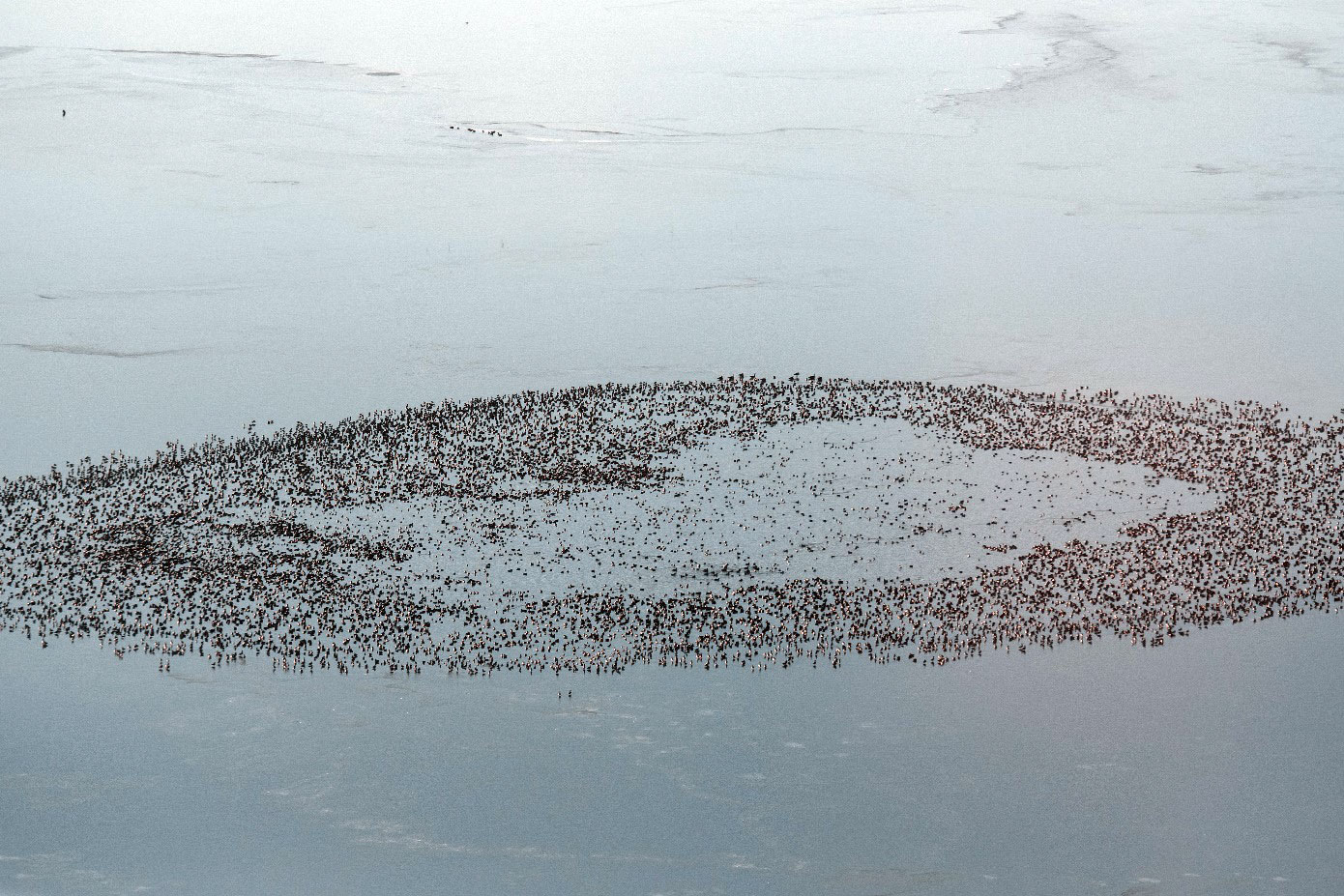
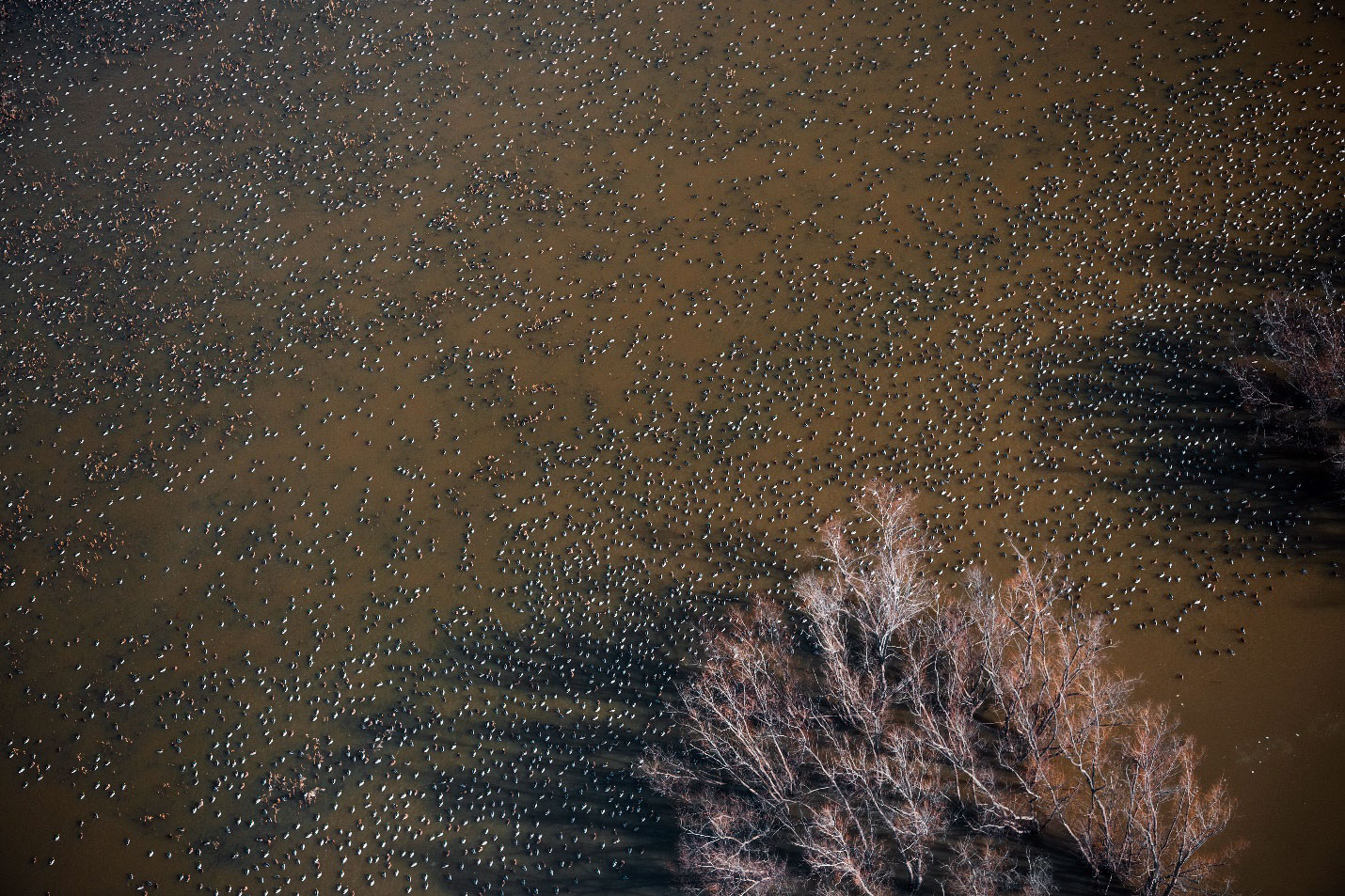
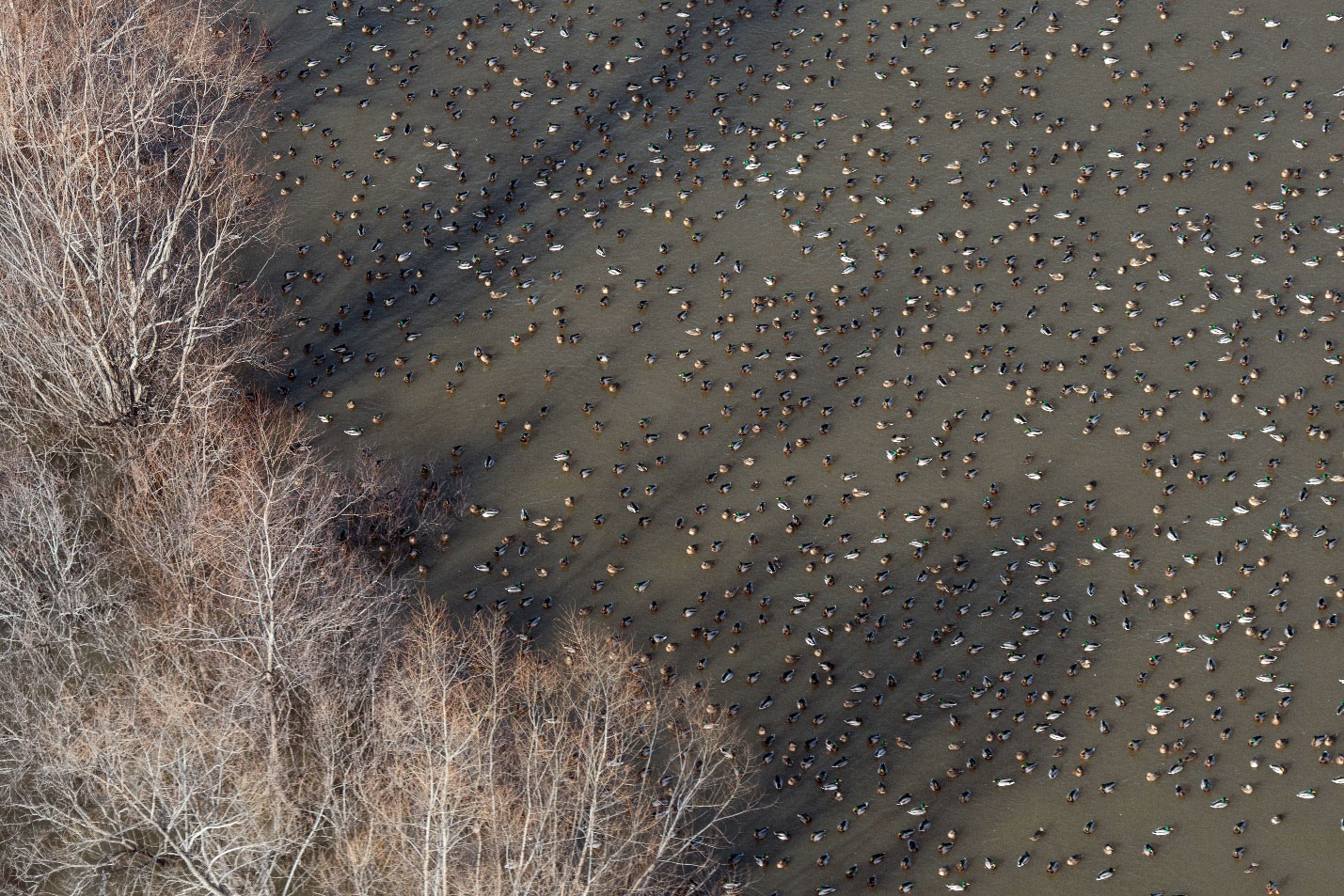
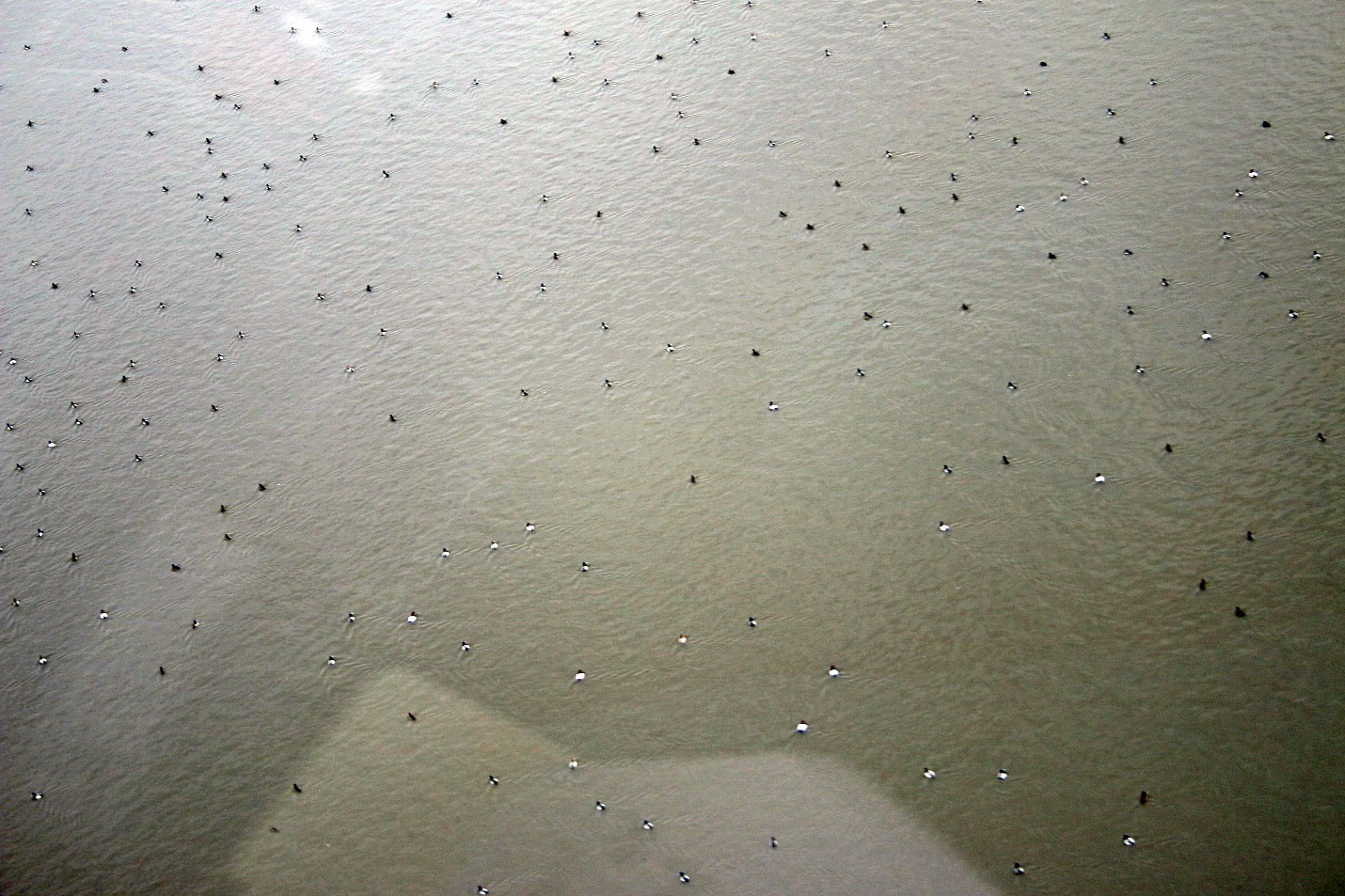
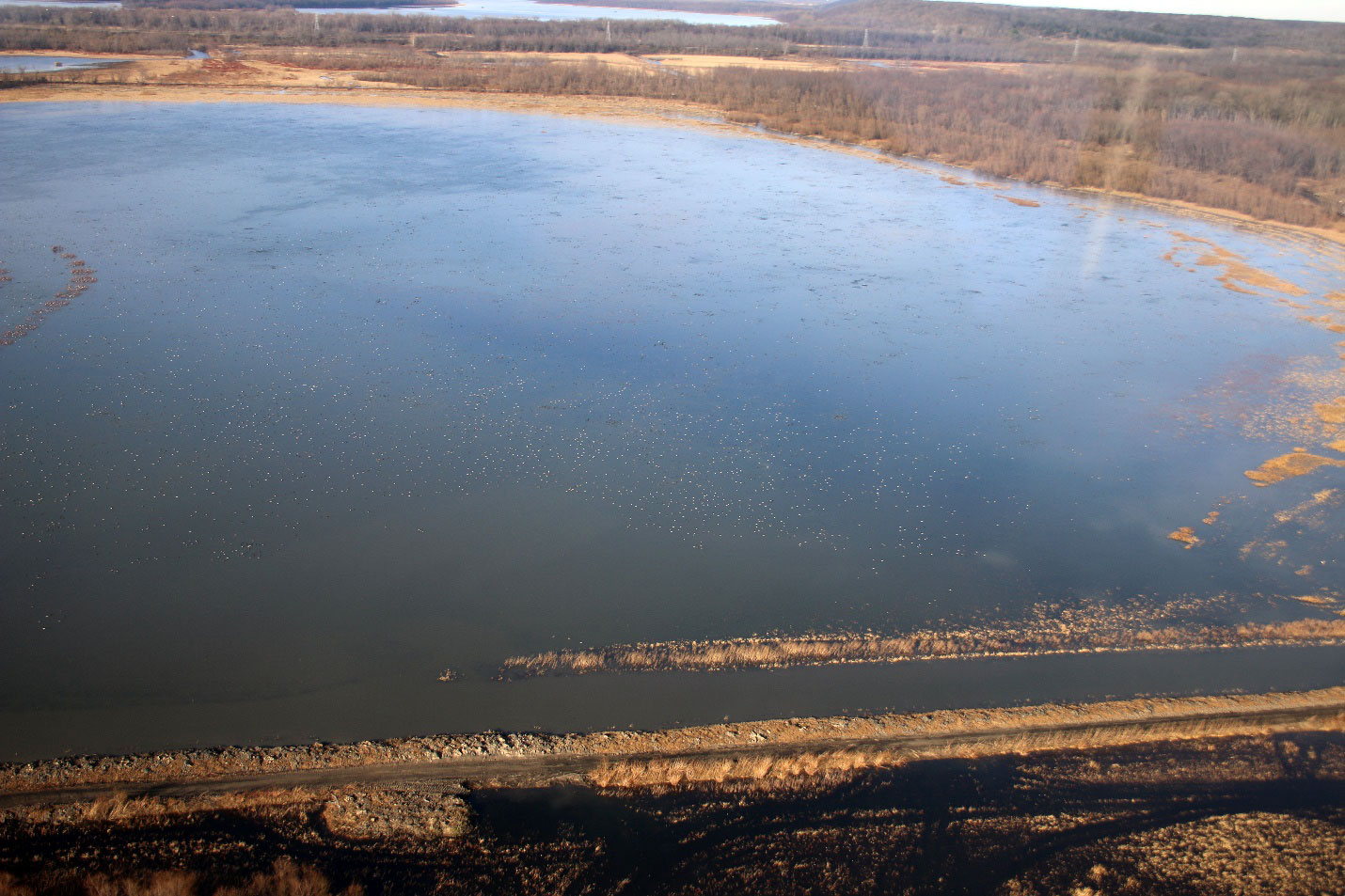
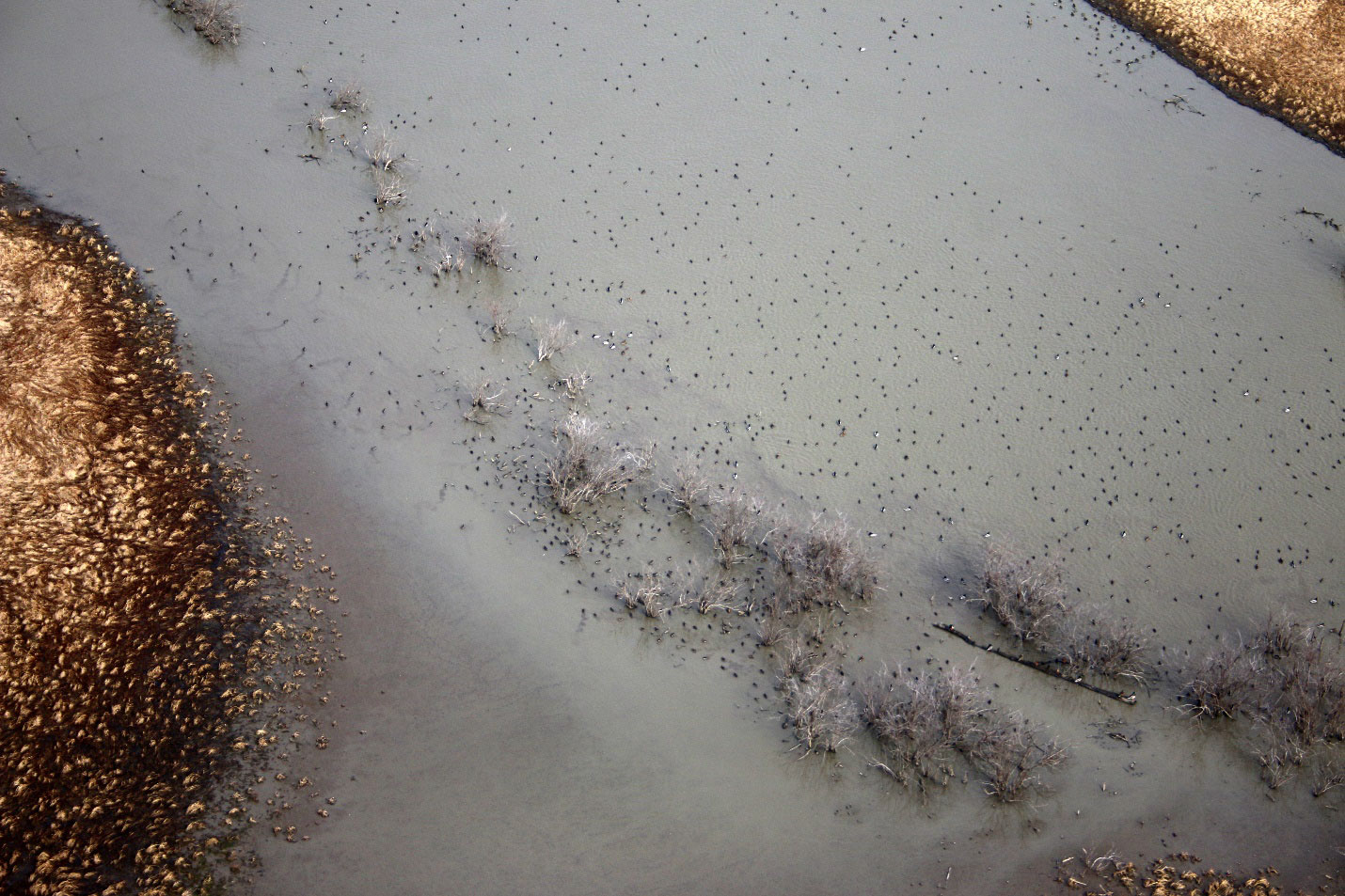
Outside of the apparent increase in divers, abundance trends along the Mississippi River were drastically different from those observed on the Illinois River this week. Mallard (-64%), pintail (-19%), and green-winged teal (-3%) abundances were all below LTAs along this river system. Other than redheads, scaup, and canvasbacks, all other species were also below LTA this week, ultimately leading to total duck abundance being 22% below LTA this week. Though the divers on pool 19 aren’t necessarily “early,” I wasn’t expecting the number we saw. The rafts took a couple of extra passes to wrap my head around.

I didn’t get to do one last year, so this is my annual tribute to our four-legged companions. Dogs play a vital role in the hunt, if you’re lucky enough to hunt over a good one. I’m thankful that I have been. In the dog community, you’ll often hear “retrievers save game.” Although I don’t need it because I’ve seen it with my own eyes, there is data to support this claim. In fact, data suggests a well-trained retriever can increase recoveries of crippled birds by as much as 40%. Aside from having a much better sense of smell than we do, they can get in and out of places we just can’t as humans. And let’s face it, it’s much more convenient to send a dog to chase a downed bird than trudge through the muck to get to it yourself.

Personally, dogs are an integral part of life. They keep me company on slow hunts, nudge my arm for a retrieve when they know I need a break from the computer, and are a part of my family. We spend a lot of time in the off-season training and, to me, there’s just nothing like watching a dog do its work. A good gundog is never late and is our extra set of eyes in the duck blind. They only want to do their job well for you and won’t rest until they do. They’re irreplaceable. Family.

Another saying in the dog community: the cost of owning a good dog is heartbreak at the end. I don’t need data to know that’s true either. Give ‘em a little extra food, scratch the scruff of their neck, and maybe pat them on the belly a time or two. We don’t deserve dogs, but I’m sure glad He gave ‘em to us.

For more information on the survey and this week’s numbers, visit Aerial Inventories.

Week 5 – October 23, 2025

We got back in the air for the waterfowl flight on Thursday, October 23, 2025. We have picked up more early migrators and even had a small push of mallards, but still fell below long-term averages for duck abundance this week. While we did see a slight increase in water level on the Illinois, our ducks, still mostly green-winged teal and northern pintail, remain congregated in freshly flooded, moist-soil areas (and a few cornfields). Total duck abundance (146,925) was observed 29% below long-term averages in the Illinois River Valley. Both mallard (-43%) and northern pintail (-17%) abundances were significantly below LTAs this week in the Illinois River. A bright spot this week was the abundance of green-winged teal. My estimate was 5% above the LTA for this river, with almost half of the increase attributed to Chautauqua NWR. We had to make an extra pass or two to feel comfortable with that particular estimate.

Although not as drastic as those witnessed in the IRV, similar trends were observed along the Mississippi River this week. Mallard (-32%), pintail (-8%), and green-winged teal (-15%) abundances were all below LTAs along this river system, ultimately leading to duck abundance being 32% below LTA this week. I got mixed reports from north zone hunters regarding their opener last week, but it sounds like central zone youth had good hunts. It’s our turn in the central zone this week.

I was getting gear ready earlier this week for our opener here in central Illinois on Saturday, and looked up in the loft at the “motion bag.” That old Roger’s bag has seen better days, and so have the 4-5 fading, shot-riddled, but somehow still working spinning wing decoys (SWD) inside.

Admittedly, I just don’t use the things anymore, and I should probably throw them out to make room for something else to collect dust in that corner. Like every blind in the flyway, our group has the “spinner” discussion every year. Is it worth it to drag them out? When do YOU think we should put them away? What happened to that baby Mojo hen’s head?! Are they still effective?

Removing all personal opinions here, there is data to suggest that spinners do, in fact, make a difference. Studies across the country have shown a strong latitudinal effect, meaning that as birds get further down the flyway, they become less susceptible. Similarly, there is a strong early-season effect of SWD but a declining effect throughout the season. Studies also show that the effectiveness of SWD is likely to be species- and age-dependent. Mallards and wigeon seem to be the most susceptible, and juveniles are much more likely to be fooled by SWD. And, yes, there has even been research on when it is more effective to use them.

The younger hunters out there may not remember, but several states and provinces in Canada banned SWD in the late 1990s and early 2000s. The concern was that SWDs were effective enough to warrant an evaluation of population-level impacts. USFWS conducted that evaluation, and SWDs were shown not to have effects on populations; as a result, many states/provinces began lifting bans in the mid-2000s.

So, the next time you’re sitting in the blind or at the local watering hole and the spinner topic comes up, just throw Caswell and Caswell 2004, Szymanski et al. 2005, Ackerman et al. 22006, or any other of the published papers at them. Unless, of course, you don’t want to use them… In that case, just say that you’re out there to eat breakfast and take sunrise pictures.

Good luck to everyone getting out this weekend. Stay safe and be excellent to one another. For more information on the survey and this week’s numbers, visit Aerial Inventories.

Week 4 – October 14, 2025

We got back in the air for the waterfowl flight on Tuesday, October 14, 2025. I don’t have good news for waterfowl hunters in the area. Water level in the Illinois River Valley is much lower than usual, and a few of the larger refuges in the Central MS River Valley don’t yet have water. Duck abundance is lower than long-term averages across both rivers. Because of the low water levels, our ducks, mostly green-winged teal and northern pintail, are congregated in freshly flooded moist-soil areas (and a few corn fields). As previously mentioned, total duck abundances were below their respective LTAs for the IRV (81,205) and CMRV (57,935) this week (coincidentally, both 32% below LTAs).

My takeaways from this flight are the low water levels and, seemingly, delayed migration. Blue wings are much more abundant in our region right now as compared to previous years (+112% for the IRV and +143% for the CMRV), while abundances of our other dabbling ducks are all below long-term averages. The old adage goes “if you don’t like the weather, just hang around a while…” I sure hope that is the case.

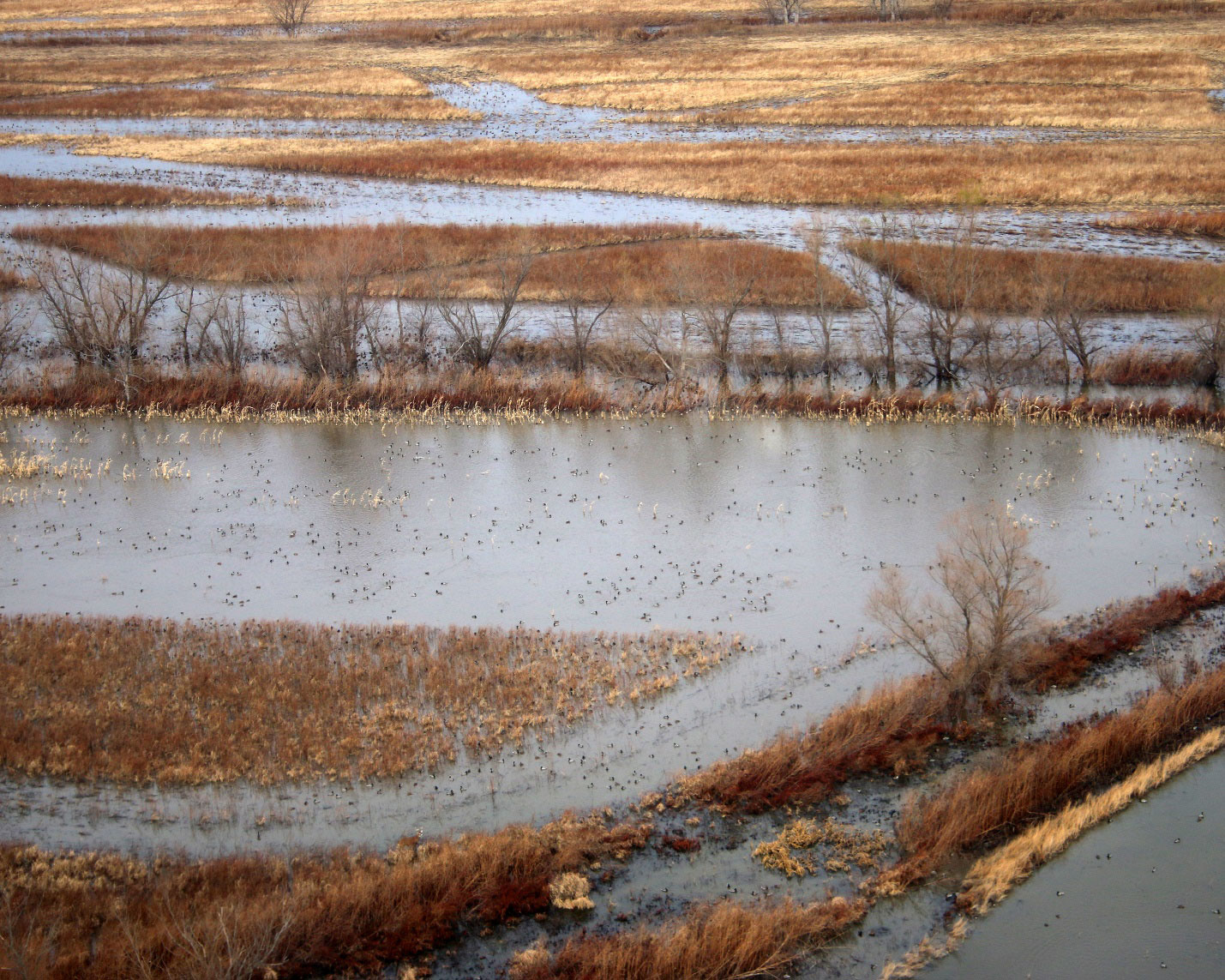
A favorite part of these early flights for both Mike and me is getting to see lots of different hunting setups. They’re as diverse as they are creative, and it’s always fun to see how folks adapt to their surroundings. Concealment is key, comfort is a luxury, and legality is, of course, important as well. Hunting in a big floating blind was a different beast for me when I moved here from the south. Most of my hunting had previously been standing next to a tree or lying in a small grass impoundment, waiting for ducks to circle overhead. So, even after 10 years, I’m still learning things about the big blinds. I often get asked what the thing is that sticks out most when we see blinds from above. It’s always movement and faces. Always.

So good luck to the hunters in these blinds, our north zone hunters, and central zone youth hunters this weekend! I hope I can include great hunting reports from them all next week! For more information on the survey and this week’s numbers, visit Aerial Inventories.

First Aerial Inventory Flight of 2025 Season – August 27, 2025

We got up in the air for the first fall waterfowl flight of 2025 on Wednesday, August 27th. We’ll call this week zero since we’re about a week ahead of schedule, earlier than we typically start the flights. There was interest among the lab and our partners in seeing what abundances looked like during the first few days of the teal migration, and we certainly did that. And you usually don’t need to twist my arm to get me into the survey plane, at least not during this time of year. 

Much like 2024, summer drawdowns were effective along many of the Illinois and MS rivers’ backwaters. So far, the waterfowl food production looks above average for the 2025 fall flight in our region. As always, many hunters will depend on timely and reasonable rains over the course of the fall. There is more water on the landscape in the IRV as compared to last year, especially on the upper reach of the river. It’s a good thing these plants like their feet wet. Water is up and into the plants in many backwaters, but it looks like most of it has escaped being overtopped. We’re early yet, so I won’t make comparisons to a 10-year average that is a week ahead, but we did count a reasonable abundance of blue-winged teal, no doubt flying in with the recent cool weather we’ve experienced. I observed 9,890 and 1,160 blue-winged teal along the Illinois and central Mississippi rivers this week, and even saw a few pintail, green-winged teal, and shoveler. There are plenty of ducks in the area to get the blood pumping and get you excited enough to round up the hunting gear. Fall waterfowl migration 2025 is underway, and all is right in the world again!

This week’s numbers and additional information about our surveys are available on our Aerial Inventories page.

Abandoned flight

We started the waterfowl survey on Tuesday the 8th, but the weather deteriorated quickly and we had to abandon the flight. We were successful in completing the entire flight on Thursday, December 10th. The ice we witnessed last week was all but gone, and the good news is we still have a few ducks around. We counted 241,875 ducks along the Illinois River and >60% of those birds were mallards. Likewise, we estimated 414,560 ducks along the central Mississippi River this week with about 41% of those being mallards. Surprisingly, we still have very strong numbers of northern pintail, green-winged teal, gadwall, northern shoveler, and canvasbacks around.

The bad news is we lost about half of our ducks compared to the December 2nd survey or roughly down 43% along the Illinois River and 50% along the central Mississippi River. I am sure some of the duck decline was due to birds moving back out on the landscape as the wetlands thawed and the ice diminished, but I believe some of those birds ended up in southeastern Missouri and western Tennessee. A couple of hunters have told me the ducks departed central Illinois on Saturday and Sunday evenings shortly after sunset. And I have heard from a couple of hunters that shot limits of ducks in western Tennessee over the last couple of days.

Our duck seasons are drawing to a close up here in northern and central Illinois. The north zone goes out on Tuesday, December 15th, while the central zone ends on Tuesday, December 22nd. Get out there and enjoy the remaining days of the season! Maybe the coming rain and snow on December 11-12 will bring in a few new migrants to end our seasons on a high note. Time will tell.

Be careful out there!
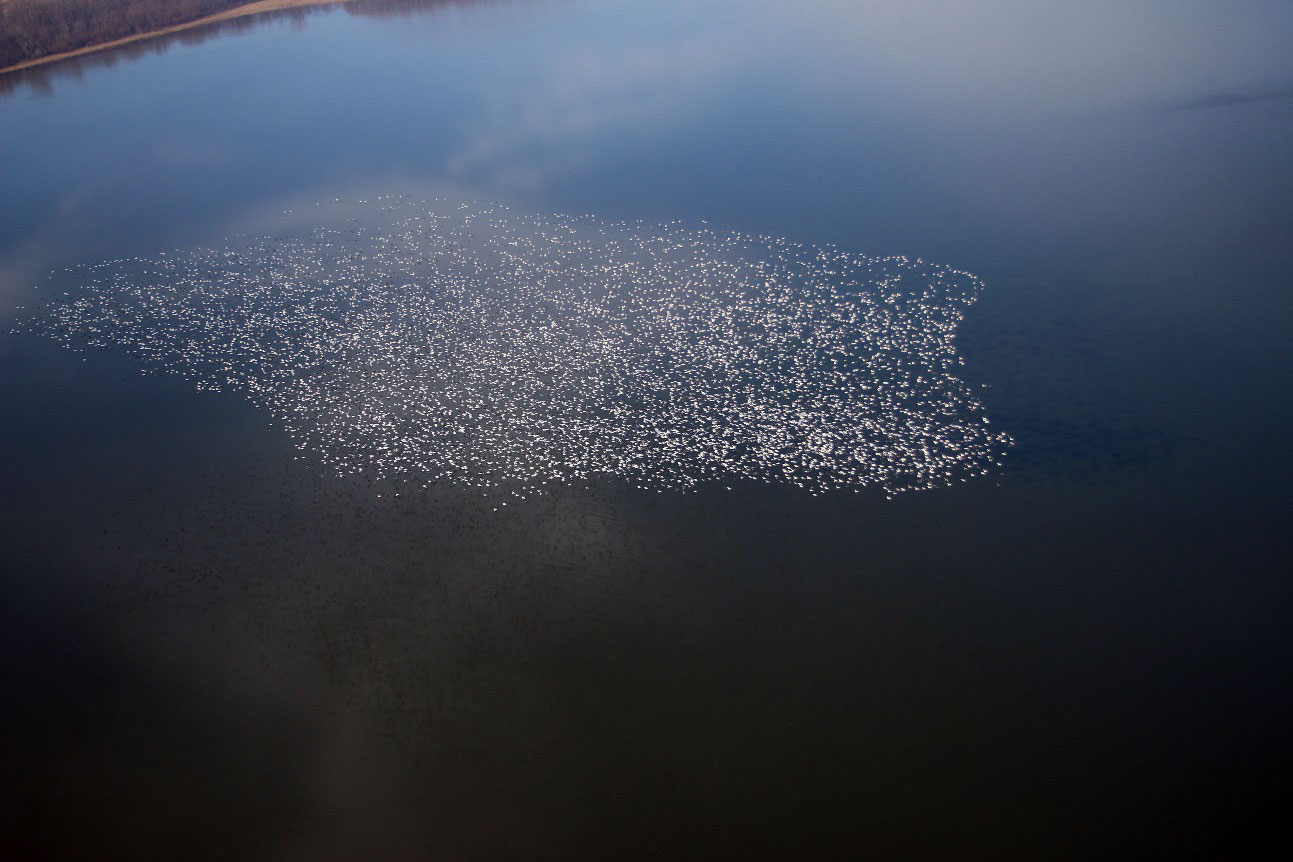
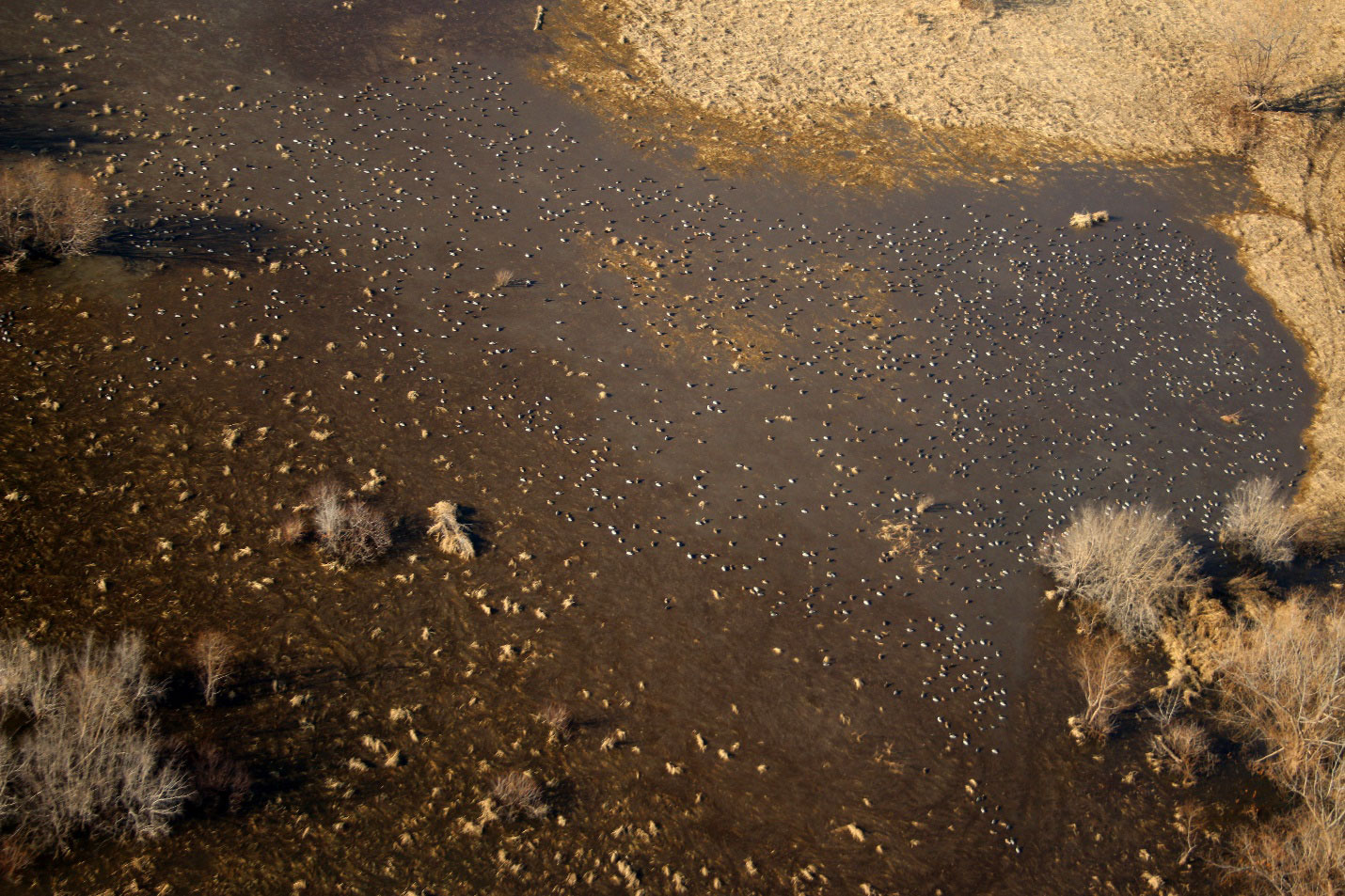
For those of you hunting snow geese and greater white-fronted geese, there are a few large concentrations around. This flock of snows was using Swan Lake at Two Rivers NWR on December 10, 2020.

I thought this photo was neat with the shadow of the airplane on the ducks at Clarence Cannon Refuge, Missouri on December 10, 2020.

Some of the remaining northern pintails basking in the sun at Clarence Cannon National Wildlife Refuge near Annada, Missouri on December 10, 2020. Note how the pintail have congregated on the shallow mudflats near the moist-soil vegetation rather than randomly spacing themselves in the water.

Illinois River Waterfowl Aerial Inventory – 12/10/2020

Central Mississippi Waterfowl Aerial Inventory – 12/10/2020

Cold-weather ducks

We waited until Wednesday of this week (December 2nd) to fly the waterfowl survey. The weather looked good so we decided to see what the cold snap would do to duck numbers. I feared most of the ducks would get out of here with the 20ºF low temps on Monday and Tuesday. Boy was I wrong! We had lots of ice on Wednesday morning, but the ducks stayed. In fact, we saw more ducks than before Thanksgiving along both rivers. I am sure we had some new ducks arrive with the cold weather and north winds, as evidenced by the increasing number of mallards and common goldeneye (commonly known as whistlers or ice ducks). And we had some other divers (primarily lesser scaup) take off for warmer climates. The departure of scaup was also apparent in our band return data from ducks that we leg band during spring around Havana, IL and Pool 19 of the Mississippi River. Our weekly band return report from the Bird Banding Lab indicated the lesser scaup are definitely in Louisiana and Texas with several bands being reported from the deep south.

This week we observed ~423,000 ducks along the Illinois River and ~830,000 ducks on the central Mississippi River. These numbers are well above average for the first week of December and 7% greater than last week along the Illinois River and 25% more than last week on the central Mississippi. Once again mallards were the most numerous species with almost a half a million mallards along the central Mississippi River and well over a quarter million on the Illinois River. I know many duck hunters in Illinois are going to doubt those numbers because hunting success has been poor for the most part, but we took several photos to show how they hunkered down and kept pockets of water from freezing in the cool temps. I guess we will see next week when we warm up and thaw if the ducks continued to stick around.

Be careful in the cold and ice!

Ducks using an open water area on one of the frozen refuges on December 2nd, 2020.

A dense flock of mallards.

More mallards from the central Mississippi River.

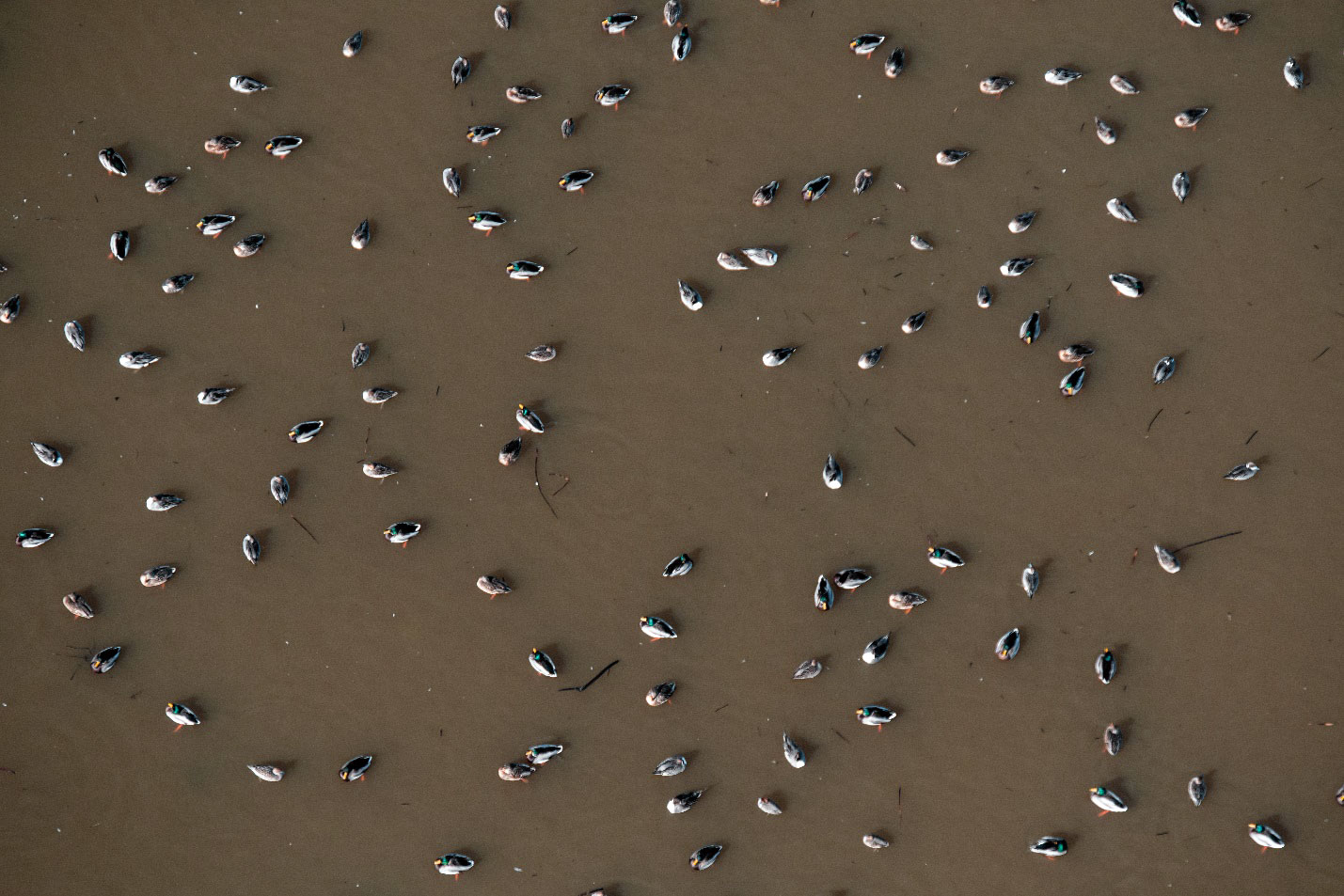
Can you pick out the northern pintail and green-winged teal among these mallards?

Illinois River Waterfowl Aerial Inventory – 12/2/2020

Central Mississippi Waterfowl Aerial Inventory – 12/2/2020

Still lots of ducks

We had a great day for the waterfowl survey on Tuesday, November 17th. The winds weren’t excessive, and we even had some cloud cover part of the day. I prefer to fly with some cloud cover because the direct sunshine and the sun’s reflection off the water aren’t blinding me on overcast days.

I know this is starting to sound like a broken record, but we really do have a lot of ducks around for mid-November. Illinois River duck numbers (427,525 total ducks) were 48% above average and up slightly (11%) from last week. The same goes for the central Mississippi River with 589,460 total ducks, which were up 36% from average and up 32% from last week.

It seems the ducks are switching refuges as more water is becoming available on the landscape. For instance, Chautauqua NWR has been slowly adding water, and the ducks have found it. I estimated over 100,000 ducks on the South Pool of Chautauqua this week and white-fronted geese were abundant was well. This contrasts with Emiquon, which usually holds a big slug of birds. Emiquon Preserve was partially dewatered this year to reset the marsh cycle; as a consequence, most of the moist-soil vegetation out there is high and dry. I only counted 1,300 ducks on the “Big E” on Tuesday. The big winner for the upper Illinois this week was Douglas Lake with over 70,000 ducks. Most of those birds were on the eastern side of Douglas Lake, which is what I call the Rice Pond refuge.

On the lower Mississippi River, the Cannon refuge keeps making headway with new water and duck numbers jumped to over 62,000. The Shanks refuge operated by Missouri Department of Conservation had over 66,000 ducks on Tuesday morning, with a healthy mob of green-winged teal (14,500) concentrating on the lower end of the refuge. And of course, Swan Lake at the confluence of the Illinois and Mississippi rivers was still hovering around 100,000 ducks. I have witnessed hunters posting pictures of diving ducks around the internet over last week. We indeed had an influx of lesser scaup (34,000 which doubled last week’s count) on Pool 19, and even a few common goldeneye made their way into the central Mississippi River.

I know the general public has been enjoying Illinois’ mild weather over the last couple of weeks, but the waterfowl hunters are needing a change. Right now, it is taking some big winds to get the ducks to move around a little. Otherwise, it is stagnant out there in the duck blind. Here’s to the HOPE of blustery weather to come!

Good luck to Illinois deer hunters as they embark on the first half of shotgun deer season, hopefully everyone will stay safe!

Illinois River Waterfowl Aerial Inventory – 11/17/2020

Central Mississippi Waterfowl Aerial Inventory – 11/17/2020

Honey Point dabblers
Honey Point dabblers at Meredosia Lake, near Meredosia, Illinois.

Pool 19 divers near Hamilton, Illinois. Note the white canvasbacks, grayish lesser scaup, and darker colored ruddy ducks in the mix.

Northern pintails and mallards on Rice Pond Preserve near Chillicothe, Illinois.

Note the dull coloration of the green-winged teal loafing on the southern end of Ted Shanks refuge near Louisiana, Missouri.

Mallards and assorted dabblers basking in the sun at Ted Shanks refuge near Louisiana, Missouri.

September 12th aerial survey

Those fickle blue-winged teal! They left us for the most part along the Illinois River. The remnants of Tropical Storm Gordon on September 7th and 8th increased water levels along the Illinois River. All that water coupled with the cool north winds and rain forced out our blue-winged teal on opening weekend of teal season. Similarly, recent rains across the upper Midwest have the central Mississippi River above flood stage or higher. Blue-winged teal numbers (7,715 ducks) this week were down 62% from the 10-yr average and decreased 60% from last week along the Illinois River. Blue-winged teal (8,565) on the central Mississippi River were up 95% from the 10-yr and 108% from last week; however, the majority of the teal were using the shallow waters of Swan Lake at Two Rivers NWR near the confluence of the Illinois and Mississippi rivers. Many of our refuges along the Illinois River held out the devastating flooding and the duck food plants were spared; but the Mississippi River was not so fortunate. Many of the refuges along the Mississippi lost their moist-soil plants from New Boston to Grafton and only the areas behind major levees remain intact.

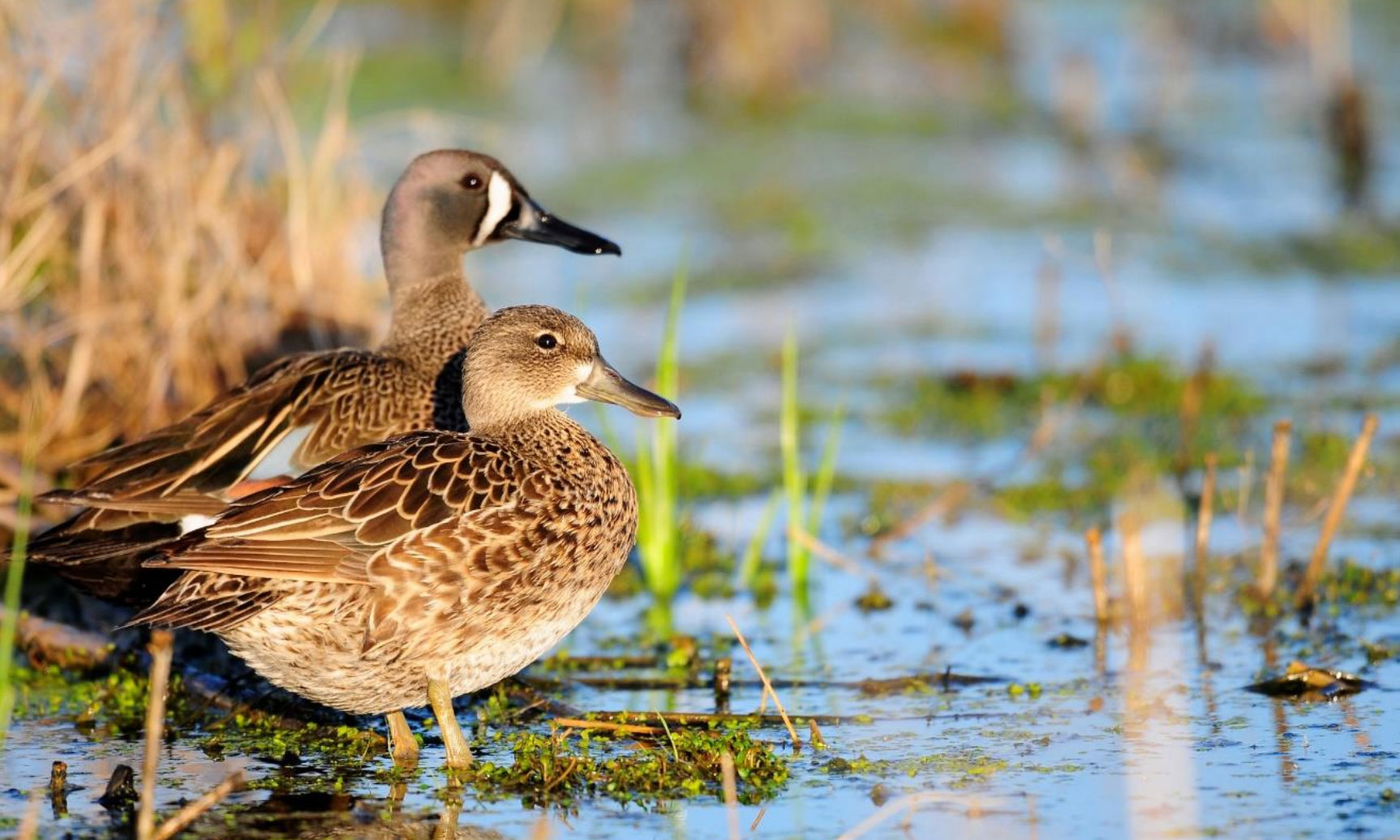
Blue-winged teal (Spatula discors) prefer to feed on the sloppy mudded areas along our rivers and wetlands. Water more than a couple inches deep sends them packing for shallower foraging sites. This is why the recent rains have caused our picky bluewings to head further south. The cooler weather did bring in a few more of the early migrants like northern pintail, northern shoveler, and green-winged teal. See if you can identify them in the photo below. Good luck hunting out there!

Stay tuned for more updates next week…

Forbes Biological Station
20003 N CR 1770E
Havana, IL 62644
217-332-DUCK (3825)
Newsletter (link opens in new window) Give
Log In