
First Aerial Inventory Flight of 2025 Season – August 27, 2025

We got up in the air for the first fall waterfowl flight of 2025 on Wednesday, August 27th. We’ll call this week zero since we’re about a week ahead of schedule, earlier than we typically start the flights. There was interest among the lab and our partners in seeing what abundances looked like during the first few days of the teal migration, and we certainly did that. And you usually don’t need to twist my arm to get me into the survey plane, at least not during this time of year. 

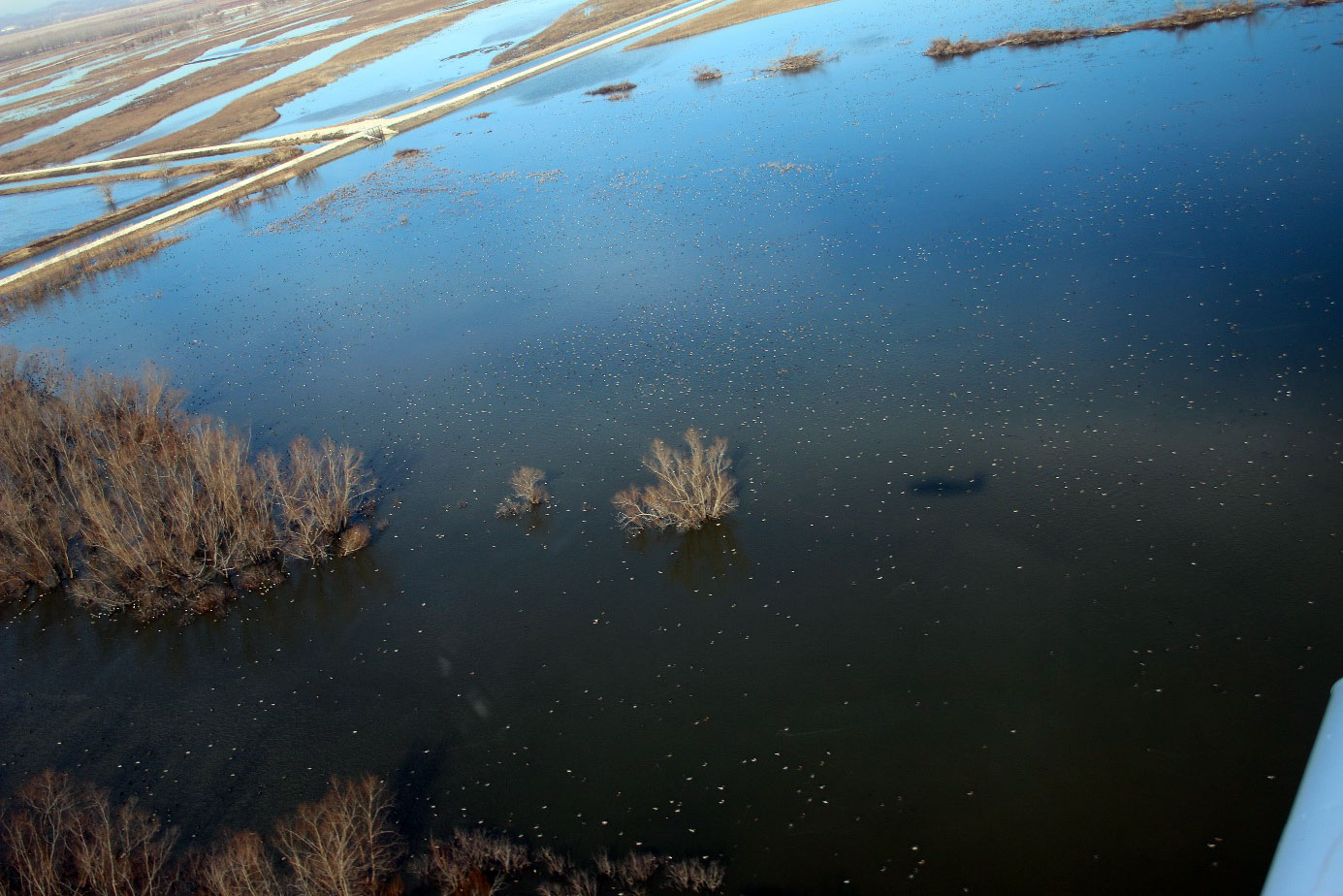
Much like 2024, summer drawdowns were effective along many of the Illinois and MS rivers’ backwaters. So far, the waterfowl food production looks above average for the 2025 fall flight in our region. As always, many hunters will depend on timely and reasonable rains over the course of the fall. There is more water on the landscape in the IRV as compared to last year, especially on the upper reach of the river. It’s a good thing these plants like their feet wet. Water is up and into the plants in many backwaters, but it looks like most of it has escaped being overtopped. We’re early yet, so I won’t make comparisons to a 10-year average that is a week ahead, but we did count a reasonable abundance of blue-winged teal, no doubt flying in with the recent cool weather we’ve experienced. I observed 9,890 and 1,160 blue-winged teal along the Illinois and central Mississippi rivers this week, and even saw a few pintail, green-winged teal, and shoveler. There are plenty of ducks in the area to get the blood pumping and get you excited enough to round up the hunting gear. Fall waterfowl migration 2025 is underway, and all is right in the world again!

This week’s numbers and additional information about our surveys are available on our Aerial Inventories page.

Week 9 – November 1, 2024

A booner spooner being held by human hands.
Booner Spooner

Wind and rain forced another late-week flight, but we managed the aerial waterfowl survey of the Illinois and central Mississippi rivers on Friday, November 1st. Duck abundance was on par with the long-term average in the Illinois River valley, but below LTA along the central MS River. I estimated ~263,310 ducks in the IRV on Friday, just above the 10-year average of ~260,000 ducks. What impressed me with that number is that we are on par with LTA while still ~22% below the LTA for mallards along this river. Northern pintail, American green-winged teal, and gadwall helped make up the deficit in total duck abundance. I estimated 176,800 ducks on the central Mississippi River, 23% below the 10-year average (~230,000). Mallards are also below LTA along this river (-47%), but we are missing gadwall, northern pintail, and northern shoveler in this region as well. It sure seems like we’re getting the “calendar ducks,” the photoperiod or migrators and birds that prefer warmer climes. The unseasonably warm temps on the prairies will likely need to cease before we see a change in the mallard deficit in our survey area. Fingers crossed that happens soon.

Friday flight again, so I’m cutting the post short. But here’s a shout-out to the Forbes crew for working tirelessly these past few weeks to get transmitters out on our target species, green-winged teal and mallards. Some of the crew were rewarded this morning with a few non-targets… shovelers! I’m really jealous that I was stuck on the plane and didn’t get to band a few of them. Northern shovelers in the trap always bring a smile to our faces… git it? SMILE to our faces? I digress… They have perhaps the most unique foraging behavior of any waterfowl. A group of shovelers will sometimes collectively spin in a circle, creating a vortex in the water column, and bringing invertebrates up from the bottom and into the reach of their spoon-shaped bills. They also hold the record (probably) for the most aliases of a bird species. Whether you call them bootlips, smiling mallards, hollywoods, souplips, spoonies, spoon-dawgs, spooners, the “real” green head, smileys… You get the picture, you can always count on them to turn a slow hunt into a fun one. My personal favorite moniker for shovelers is “bologna snatcher.” I hope you all have been able to get out and enjoy the marsh! Good luck to the MO hunters in our survey area who have their opener this weekend! Because of the late flight, I don’t have a note for this week prepared. In the central zone, our time in the marsh starts on Saturday, and I, like many other hunters in this area, anxiously await the break of the sun and the crack of the first shot. Good luck to those fortunate enough to join the pursuit and be safe out there! More information about the waterfowl survey is on our Waterfowl Aerial Inventories page. Stay tuned for more updates next week…

A person in a blue shirt holding three ducks.
A person in a hat and green shirt holding three ducks.
Forbes staff releasing captured northern shovelers.
A person in a hat and an off-white shirt holding four ducks.

Abandoned flight

We started the waterfowl survey on Tuesday the 8th, but the weather deteriorated quickly and we had to abandon the flight. We were successful in completing the entire flight on Thursday, December 10th. The ice we witnessed last week was all but gone, and the good news is we still have a few ducks around. We counted 241,875 ducks along the Illinois River and >60% of those birds were mallards. Likewise, we estimated 414,560 ducks along the central Mississippi River this week with about 41% of those being mallards. Surprisingly, we still have very strong numbers of northern pintail, green-winged teal, gadwall, northern shoveler, and canvasbacks around.

The bad news is we lost about half of our ducks compared to the December 2nd survey or roughly down 43% along the Illinois River and 50% along the central Mississippi River. I am sure some of the duck decline was due to birds moving back out on the landscape as the wetlands thawed and the ice diminished, but I believe some of those birds ended up in southeastern Missouri and western Tennessee. A couple of hunters have told me the ducks departed central Illinois on Saturday and Sunday evenings shortly after sunset. And I have heard from a couple of hunters that shot limits of ducks in western Tennessee over the last couple of days.

Our duck seasons are drawing to a close up here in northern and central Illinois. The north zone goes out on Tuesday, December 15th, while the central zone ends on Tuesday, December 22nd. Get out there and enjoy the remaining days of the season! Maybe the coming rain and snow on December 11-12 will bring in a few new migrants to end our seasons on a high note. Time will tell.

Be careful out there!
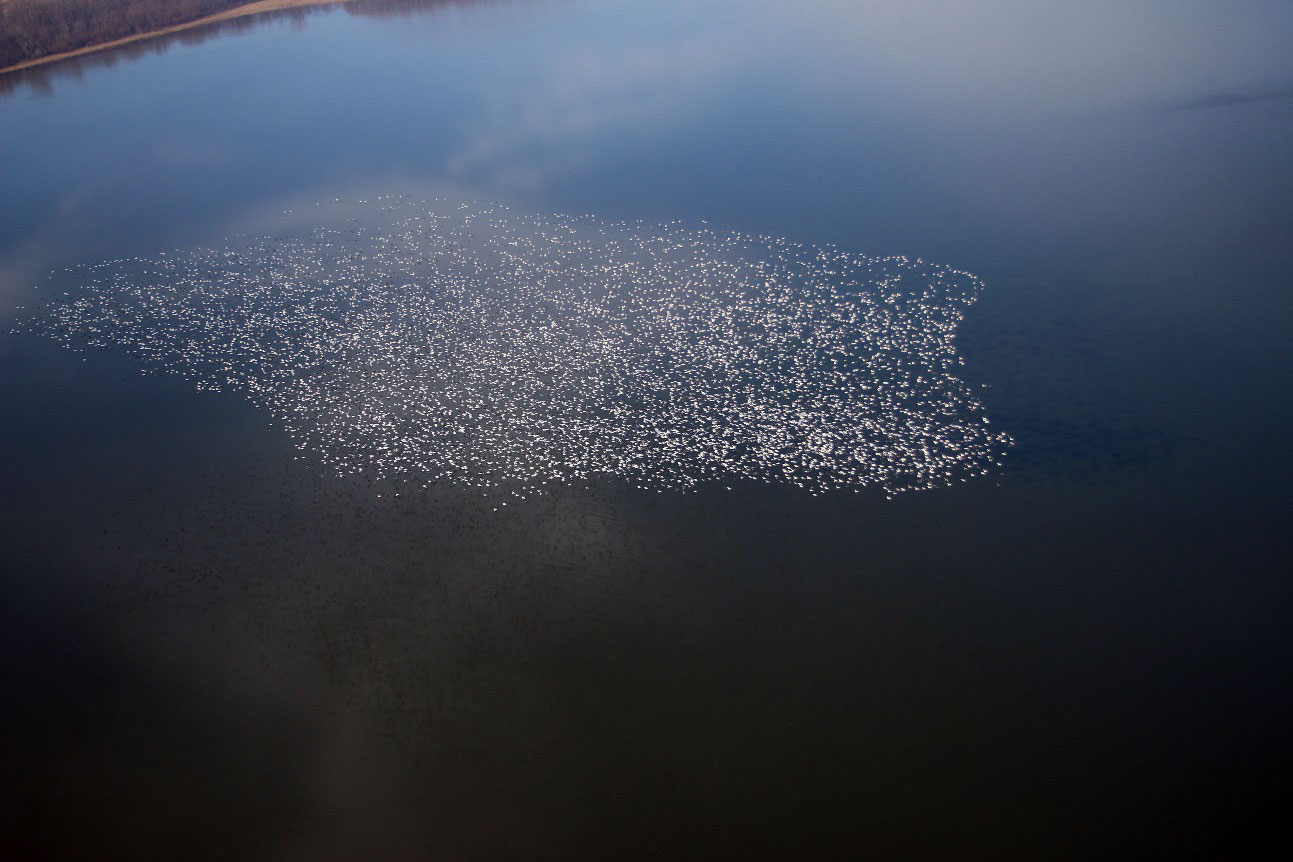
For those of you hunting snow geese and greater white-fronted geese, there are a few large concentrations around. This flock of snows was using Swan Lake at Two Rivers NWR on December 10, 2020.

I thought this photo was neat with the shadow of the airplane on the ducks at Clarence Cannon Refuge, Missouri on December 10, 2020.

Some of the remaining northern pintails basking in the sun at Clarence Cannon National Wildlife Refuge near Annada, Missouri on December 10, 2020. Note how the pintail have congregated on the shallow mudflats near the moist-soil vegetation rather than randomly spacing themselves in the water.

Illinois River Waterfowl Aerial Inventory – 12/10/2020

Central Mississippi Waterfowl Aerial Inventory – 12/10/2020

September 12th aerial survey

Those fickle blue-winged teal! They left us for the most part along the Illinois River. The remnants of Tropical Storm Gordon on September 7th and 8th increased water levels along the Illinois River. All that water coupled with the cool north winds and rain forced out our blue-winged teal on opening weekend of teal season. Similarly, recent rains across the upper Midwest have the central Mississippi River above flood stage or higher. Blue-winged teal numbers (7,715 ducks) this week were down 62% from the 10-yr average and decreased 60% from last week along the Illinois River. Blue-winged teal (8,565) on the central Mississippi River were up 95% from the 10-yr and 108% from last week; however, the majority of the teal were using the shallow waters of Swan Lake at Two Rivers NWR near the confluence of the Illinois and Mississippi rivers. Many of our refuges along the Illinois River held out the devastating flooding and the duck food plants were spared; but the Mississippi River was not so fortunate. Many of the refuges along the Mississippi lost their moist-soil plants from New Boston to Grafton and only the areas behind major levees remain intact.

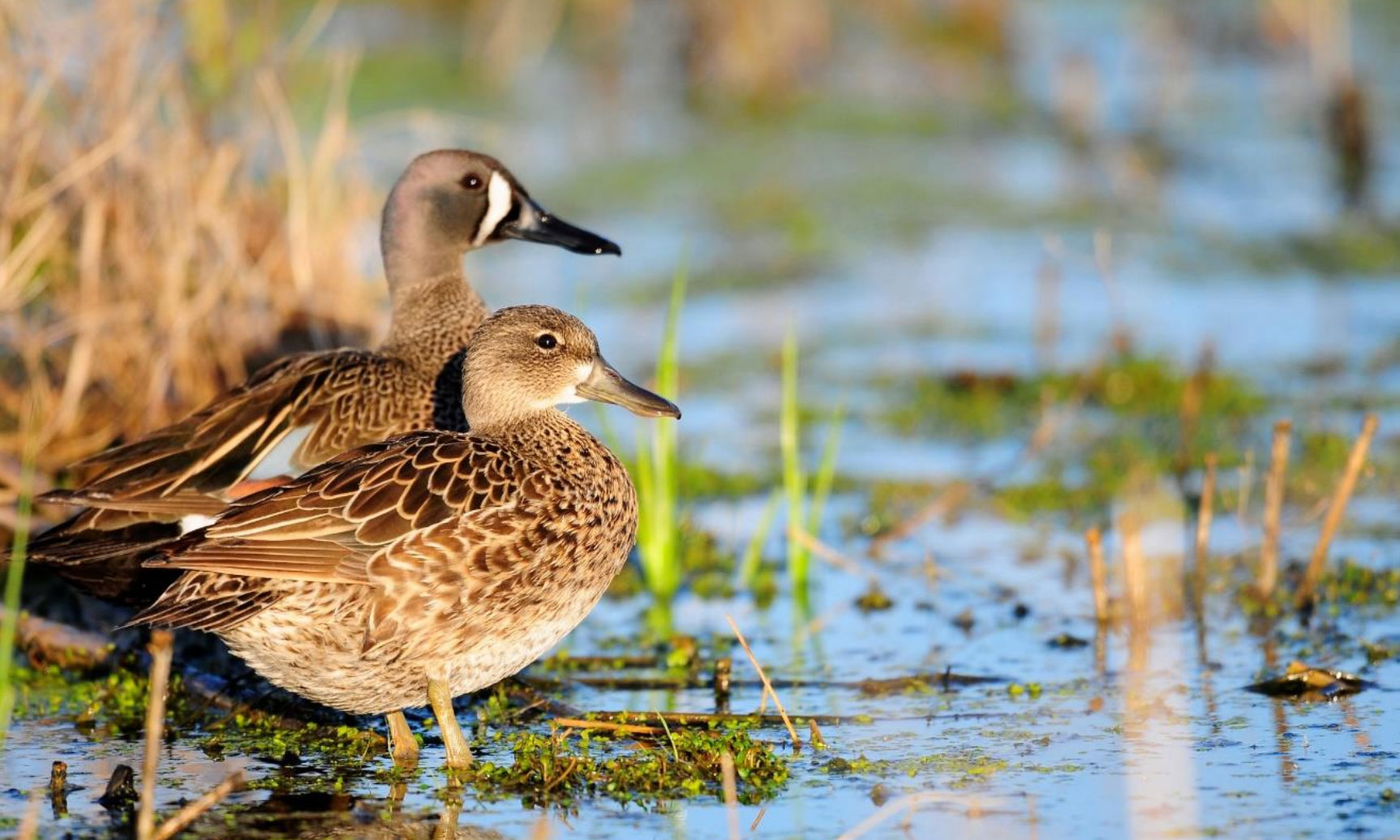
Blue-winged teal (Spatula discors) prefer to feed on the sloppy mudded areas along our rivers and wetlands. Water more than a couple inches deep sends them packing for shallower foraging sites. This is why the recent rains have caused our picky bluewings to head further south. The cooler weather did bring in a few more of the early migrants like northern pintail, northern shoveler, and green-winged teal. See if you can identify them in the photo below. Good luck hunting out there!

Stay tuned for more updates next week…

Forbes Biological Station
20003 N CR 1770E
Havana, IL 62644
217-332-DUCK (3825)
Log In